
How to Maintain Epoxy Floors Without Dulling Them

A freshly coated epoxy floor has a clean, tailored look that can make a garage, showroom, workspace, or covered patio feel completely renewed. The good news is that learning how to maintain epoxy floors does not require harsh chemicals or constant scrubbing. It comes down to removing grit before it scratches, cleaning spills promptly, and using products that respect the coating rather than slowly wearing it down.
For Southwest Florida property owners, a little routine care goes a long way. Sand, rainwater, salt residue, vehicle traffic, and humidity can all find their way onto a floor. With the right habits, epoxy can continue looking polished while delivering the practical protection that made it a smart investment in the first place.
Start With Dry Cleaning, Not Heavy Mopping
The most common source of dullness is not a major spill. It is the fine sand, dust, and debris tracked in on shoes, tires, tools, and equipment. Those particles act like a mild abrasive when they are repeatedly walked or driven across the surface.
Sweep with a soft-bristle broom or use a dust mop several times a week in active spaces. A garage that sees daily vehicle use may need attention more often than a storage room or low-traffic commercial area. For larger spaces, a soft-floor vacuum without an aggressive beater bar can be a convenient option.
Place quality mats at entry points to catch sand and moisture before they reach the floor. This simple detail is especially helpful near garage doors, side entrances, pool-adjacent areas, and commercial doorways. Mats should be cleaned regularly, too. A dirty mat can hold moisture and grit against the coating.
How to Maintain Epoxy Floors With the Right Cleaner
For routine washing, use warm water and a pH-neutral cleaner formulated for coated floors. Follow the product dilution instructions closely. More cleaner is not better - excess solution can leave a film that makes a glossy floor look hazy or attracts more dirt over time.
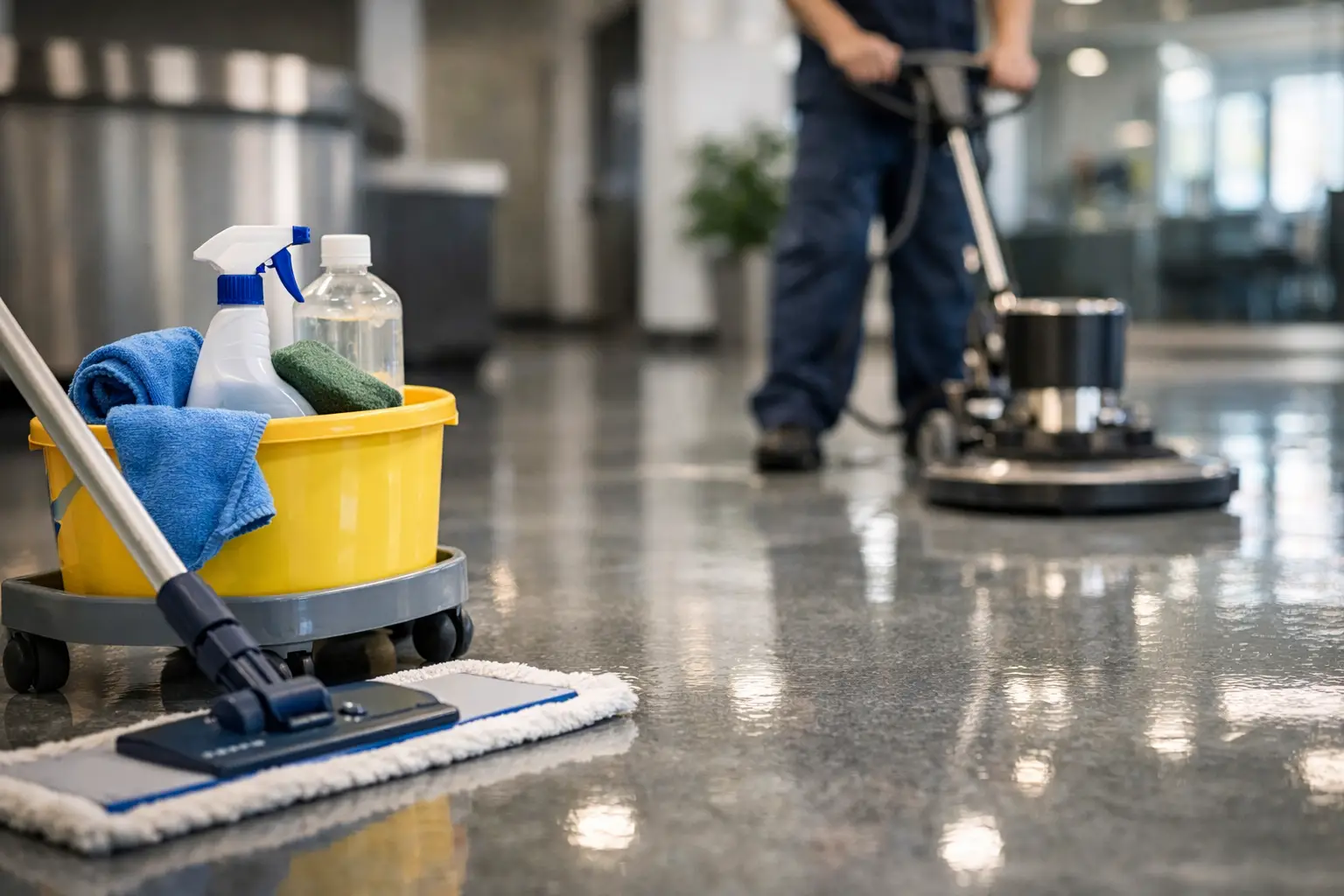
Use a microfiber mop or a soft mop head, changing the water as it becomes cloudy. On a lightly soiled residential epoxy floor, clean water and a small amount of neutral cleaner are often enough. Commercial floors, garages, and work areas may need a more frequent wash schedule because of tire residue, dust, and foot traffic.
Avoid cleaners that are acidic, highly alkaline, or abrasive unless the coating manufacturer specifically approves them. Vinegar, citrus-based cleaners, powdered scrubs, and strong degreasers may sound like practical household options, but repeated use can affect gloss, create streaking, or weaken the topcoat. Products that leave waxes, oils, or soap residue can also make the floor appear uneven.
When in doubt, test a new cleaner in an inconspicuous area first. That small precaution is far easier than correcting an entire floor with a cloudy finish.
Treat Spills Quickly and Gently
Epoxy is valued for its resistance to stains and spills, but “resistant” does not mean immune. Wipe up oil, gasoline, paint, food, chemicals, and standing water as soon as practical. Use absorbent towels, then clean the area with a neutral floor cleaner and rinse with clean water if needed.
For automotive fluids, start by blotting rather than spreading the spill across a larger area. A soft cloth, paper towels, or an absorbent material can lift most of the mess before you clean the remaining residue. Do not reach immediately for a harsh solvent. Some solvents can soften or discolor certain epoxy systems, particularly if they remain on the surface for too long.
Tire marks are another common concern in garages. First try warm water and a pH-neutral cleaner with a microfiber pad. If marks remain, use a coating-safe degreaser approved for epoxy and work in a small area. Avoid stiff brushes, steel wool, and scouring pads. The goal is to remove the residue without scratching the finish around it.
Protect High-Traffic Areas From Wear
Epoxy is durable, but every floor has limits. Heavy equipment, rolling toolboxes, metal furniture legs, and frequent vehicle movement can eventually leave visible wear in the most active areas. Protective measures preserve both the coating and the refined appearance of the space.
Use rubber or felt pads beneath shelving, workbenches, furniture, and equipment that stays in place. For items that move often, choose non-staining wheels or casters. If a heavy object must be dragged, place a protective board or mat underneath instead of pulling it directly across the floor.
In garages and workshops, give vehicles a moment to cool after long drives before parking on the coating. Modern epoxy systems are designed for demanding environments, but very hot tires and repeated pressure can leave marks on some coatings. If your garage sees frequent vehicle traffic, consider using parking mats in the tire paths.
Commercial property owners should pay close attention to entryways, service counters, stock areas, and routes used by carts or dollies. These locations benefit from more frequent dry cleaning and periodic inspection. Addressing a small scuff pattern early can prevent a high-traffic lane from looking tired before the rest of the floor does.
Keep Moisture and Florida Conditions in Mind
Southwest Florida's climate adds a few maintenance considerations. Rainwater can carry sand, lawn chemicals, salt, and organic debris into a garage or business entrance. After storms, sweep away debris and remove standing water promptly. Leaving wet leaves, soil, or mulch on the surface for extended periods can create staining or a slippery area, even on a well-installed coating.
Humidity itself does not mean an epoxy floor will fail. The more relevant concern is consistent moisture coming from beneath the slab, around door thresholds, or through cracks. If you notice bubbling, peeling, whitening beneath the coating, or persistent damp spots, do not cover the issue with another cleaner or floor mat. A professional evaluation can identify whether the concern is surface-related or connected to moisture in the concrete.
Sun exposure also deserves attention. Standard epoxy can amber or fade when exposed to direct ultraviolet light for long periods. Regular cleaning will keep the floor looking cared for, but it cannot reverse UV-related color changes. In sun-exposed areas, a professionally specified UV-stable topcoat is usually the better long-term solution.
Know When Cleaning Is Not Enough
A well-maintained epoxy floor should not need major attention every year. Still, coatings can eventually show signs that go beyond ordinary cleaning: chips from dropped tools, deep scratches, worn topcoat in traffic lanes, or peeling caused by an underlying concrete issue.
Small chips can often be repaired before moisture and debris reach the exposed edge. Deep damage and broad areas of peeling require a more careful approach. The right repair depends on the original coating system, the condition of the concrete, and the cause of the damage. Simply coating over a failing area can lead to another repair sooner than expected.
Professional maintenance is particularly worthwhile for second-home owners, busy families, and commercial managers who want the floor to remain polished without trial and error. A qualified crew can assess whether the surface needs a thorough clean, a localized repair, a new protective topcoat, or more extensive preparation.
A Simple Maintenance Schedule That Works
For most residential epoxy floors, sweep or dust mop weekly, clean spills as they happen, and wet mop every few weeks or whenever visible soil builds up. A garage near the beach or a space used for projects may need more frequent attention because sand and residue accumulate quickly.
For commercial spaces, the schedule depends on traffic. Daily dry cleaning may be appropriate in busy areas, with regular damp mopping and spot cleaning throughout the week. Rather than setting a rigid rule, let the floor's use guide the routine. A clean floor is easier to protect than one that is allowed to collect grit until it needs aggressive cleaning.
The best epoxy floor maintenance plan is the one that fits how you use the space. Gentle, consistent care protects the smooth finish, supports a safer walking surface, and keeps the room looking as intentional as the day it was completed. When the coating needs more than routine cleaning, Bella Vita Painting can help you evaluate the next right step with the same care given to the original finish.


Comments